How Can the Economy Grow While Climate Disasters Destroy Billions?
Europe’s economy continues to grow, even as extreme weather causes billions of euros in damage. How can both be true? The answer lies in how we measure economic growth.

Europe’s economy continues to grow, even as extreme weather causes billions of euros in damage. How can both be true? The answer lies in how we measure economic growth.

From deadly heatwaves and devastating wildfires to floods and droughts, the summer of 2026 revealed the growing human and economic consequences of extreme weather in a warming world. Beyond the environmental damage, these events raise an increasingly urgent question: how resilient are the places we live and build?

In public debate, the climate and energy transition is often presented as a cost item: higher energy prices, additional investment, and a loss of competitiveness. Scientific literature and recent policy analyses, however, show a different picture: well-designed sustainability policy will increase prosperity, raise productivity, and reduce risks.

Grid congestion has become a bottleneck for sustainability, but it also presents an unexpected opportunity. When the grid cannot expand fast enough, buildings and communities are forced to rethink energy at the local level

The EU Taxonomy Regulation aims to direct capital flows toward sustainable activities, prevent greenwashing, and increase transparency for investors. Learn more about it.

The report outlines a clear tension: the Netherlands still performs relatively well in terms of broad prosperity, but the foundations for future prosperity are weakening. The central recommendation is to choose deliberately and build strong positions in a limited number of strategic domains.

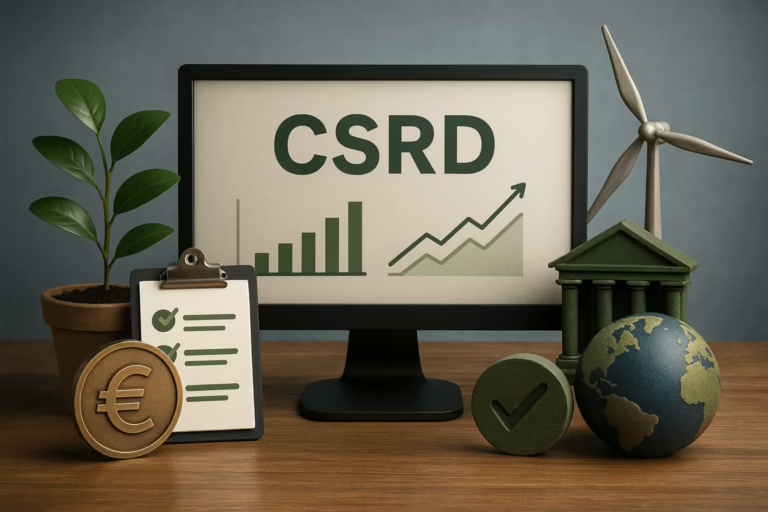
The Corporate Sustainability Reporting Directive (CSRD) has redefined corporate accountability in the European Union. It is a legal obligation that elevates sustainability reporting to the same level as financial reporting.

Just public relations and green strategy will no longer suffice to comfort stakeholders. To an increasing extent, public organizations and larger companies will need to report on their sustainability profile.

The Paris Agreement, adopted in 2015, offers significant opportunities for businesses to thrive in a sustainable, forward-looking economy.

The Green Economy is more than a buzzword—it’s a movement transforming how we live, work, and build for the future. As Amsterdam continues to lead the way in sustainability, understanding the Green Economy’s core principles can empower citizens, real estate developers, and investors to adapt and thrive. Let’s break it down in simple terms.
Madefor. the future of our planet (a.k.a. Madefor.Paris) is an online publication promoting awareness on topics related to the 2015 Paris Agreement, such as energy-neutral offices, sustainable working, smart mobility (car sharing), smart living, budget optimization, climate change legislation, CO2 and hydric footprint, recreation, and well-being. These aspects are crucial for the future of the citizens of Amsterdam and the world.
This site is protected by reCAPTCHA and the Google Privacy Policy and Terms of Service apply.